
Is It Illegal to Video Record Someone Without Permission?
Is It Illegal to Video Record Someone Without Permission?
You pull out your phone to record something, and a second later you're wondering whether what you just did was legal. The confusion makes sense: video recording laws sit at the intersection of federal wiretapping law, state privacy statutes, and the specific location where you're standing. Most people assume recording is either always fine in public or always requires consent. The actual rules are more specific than that, and the video-versus-audio distinction can mean the difference between a protected recording and criminal exposure in some states.
Video recording someone without their permission is legal in most public spaces in the United States, where courts recognize no reasonable expectation of privacy. Private settings are more complicated: 11 states require all parties to consent before any recording that captures audio. Certain private spaces like bathrooms and bedrooms are always off-limits regardless of state law.
Video Recording in Public: What the Law Actually Allows
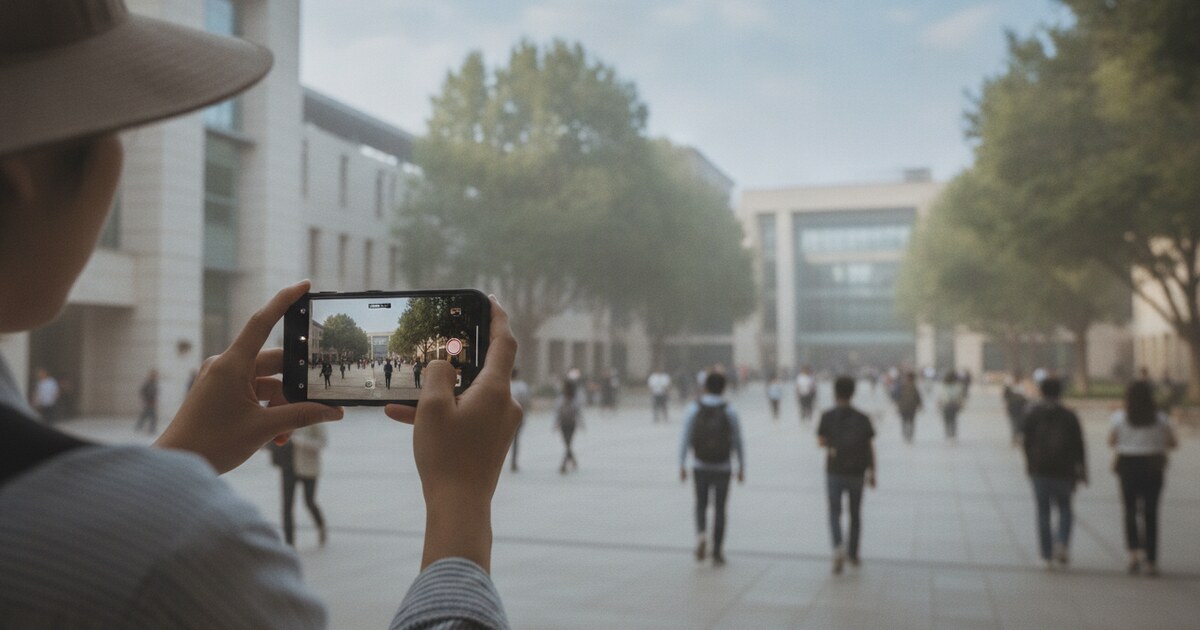
The legal foundation for recording in public comes from Katz v. United States (1967), where the Supreme Court established the "reasonable expectation of privacy" doctrine. In a public park, a campus quad, a government building lobby, or a public street, anything visible from that location carries no reasonable expectation of privacy. Filming it is generally legal in all 50 states.
Here's the distinction most recording law articles miss: the federal Wiretap Act (18 U.S.C. § 2511) governs the interception of oral and electronic communications. It's primarily an audio law. Pure video recording without capturing audio isn't covered by the federal Wiretap Act, which means you don't trigger federal wiretapping exposure from video-only footage in a public space. When you film someone walking down a public street without capturing their voice, the main legal question is visual privacy, not consent. The 11 states with all-party consent requirements (California, Delaware, Florida, Illinois, Maryland, Massachusetts, Montana, Nevada, New Hampshire, Pennsylvania, and Washington) apply those consent rules to the audio component of a recording. The same scene recorded silently shifts the analysis to whether a reasonable visual expectation of privacy existed, not whether you got everyone's permission. This video-versus-audio distinction matters most in states like California, where recording audio without consent violates Penal Code § 632, but recording someone's image in a public space without audio generally doesn't carry the same criminal exposure under that statute.
Some limits exist even in public spaces. You can't film inside bathrooms, changing rooms, or other spaces where visitors have a right to visual privacy even in an otherwise public building. Filming someone through a window into their home from a public sidewalk can still violate state voyeurism statutes, even though you're physically standing in a public space. And schools, courthouses, and some government facilities have policies or specific statutes restricting photography and video in common areas.
Video Recording in Private Spaces
Private settings carry a strong presumption of visual privacy, and recording someone without consent in a private space is where most legal trouble starts. Courts apply the reasonable expectation of privacy standard here too, but the presumption runs the other direction: a home, a private office, a hotel room, or a closed conference room all carry clear privacy expectations for both audio and visual recording.
Recording someone in a private space without their knowledge and without being a participant in whatever is happening there is illegal under federal law in all states. If someone installs a hidden camera in a bedroom or a private bathroom, that's not a wiretapping issue. That's federal voyeurism under 18 U.S.C. § 1801, which carries up to a year in federal prison for a first offense and up to 10 years if the victim is a minor. State laws add another layer. Most states have their own voyeurism statutes that criminalize non-consensual recording in spaces where there's a reasonable expectation of privacy for the body. These statutes cover video-only recording in private spaces, which means the video-versus-audio protection that applies in public spaces collapses once you're filming someone in a private setting without consent.
Consent Laws by State: What Video Recorders Need to Know
The one-party versus all-party consent split matters most when your video recording also captures audio of a private conversation. Here's how it works:
One-party consent states (approximately 38 states plus D.C.): The federal Electronic Communications Privacy Act (ECPA) sets the floor. Any participant in a conversation can record it without telling the other parties. If you're in the conversation, your own presence counts as consent in these states.
All-party consent states (11 states): California, Delaware, Florida, Illinois, Maryland, Massachusetts, Montana, Nevada, New Hampshire, Pennsylvania, and Washington all require everyone's consent before a conversation is recorded. Violations are criminal, not just civil. Recording a meeting in one of these states without informing the participants can result in criminal charges under both state law and the federal Wiretap Act.
Hybrid states: Michigan, Connecticut, and Oregon have statutes that courts sometimes apply as all-party consent depending on the circumstances. If you're in one of these states and recording something sensitive, treat it as an all-party state until you've confirmed the current statute.
For phone and video calls that cross state lines, most attorneys recommend applying the stricter standard. If either person is in a two-party consent state, treat the interaction as requiring everyone's agreement before recording. For a deeper look at how consent laws apply specifically to audio recording, see the full breakdown in Is It Illegal to Record Someone Without Their Permission? and our guide on tape recording laws by state.
Recording in Classrooms and Lecture Halls
Classrooms sit in a legal middle ground. A lecture delivered by a professor to a room full of students generally doesn't carry the same privacy expectations as a private conversation: the professor is speaking to the whole class, and many universities have explicit policies permitting recording for personal academic use.
That said, a few specific rules apply in most schools:
- Professor consent: Some professors restrict recording in their course syllabus. Violating that restriction can result in academic discipline, even if it doesn't violate state law.
- Student privacy: Recording other students during class discussions without their knowledge can create problems if your video captures their voices or images in ways they didn't agree to.
- All-party consent states: In California, Illinois, and other all-party states, recording a classroom discussion (audio included) without disclosure to all participants could technically trigger consent law exposure, though enforcement for personal note-taking is uncommon.
- University accommodation policies: Some schools permit recording only for students with documented accessibility needs. Check your school's specific policy.
For a complete breakdown of what's allowed when recording lectures, see our guide on recording lectures in college. If you're recording lectures for personal study, the safest approach is a clear audio recording of the lecture itself with the professor's awareness. NoteHive captures your lectures and converts them into organized notes, flashcards, and quizzes automatically, so you don't lose track of what was covered.
When Video Recording Is Always Illegal
Some spaces have no ambiguity regardless of state or consent law:
- Bathrooms, locker rooms, and changing rooms: Recording here without consent is a crime in all 50 states. Video-only footage in these spaces violates both state voyeurism statutes and, in many circumstances, federal law.
- Bedrooms: Recording someone in a bedroom without their consent crosses into criminal voyeurism in virtually every U.S. jurisdiction.
- Medical and legal settings: Hospitals and attorney-client meetings have additional federal and state privacy protections that restrict recording without consent, separate from wiretapping law.
- Video of minors in compromising positions: Federal law under 18 U.S.C. § 2256 applies regardless of location, setting, or consent arguments.
The reasonable expectation of visual privacy in these spaces is so well established that no location argument changes the analysis. Being in a publicly accessible building doesn't override it.
Penalties for Illegal Video Recording
Criminal penalties vary by state and by what was captured.
Federal voyeurism (18 U.S.C. § 1801): Up to 1 year for a first offense, up to 10 years if the victim is a minor.
Federal Wiretap Act (18 U.S.C. § 2511, applies when audio is captured without consent): Up to 5 years in federal prison per violation, plus civil damages of $10,000 per violation or actual damages if higher.
State criminal penalties for all-party consent violations:
- California: up to $2,500 per violation and 1 year in county jail under Penal Code § 632
- Pennsylvania: up to 7 years in prison
- Florida: up to 5 years in prison
- Illinois: fines up to $25,000
Beyond criminal liability, recording someone without consent can result in civil lawsuits for invasion of privacy. Civil damages in some states include statutory amounts even without proof of specific financial harm. Federal and state charges can stack, meaning a single covert recording session in California can simultaneously trigger Penal Code § 632 and the federal Wiretap Act.
Frequently Asked Questions
Can I sue someone for video recording me without my permission?
Yes, in many states. Civil lawsuits for invasion of privacy are separate from any criminal charges. If someone recorded you without consent in an all-party consent state, or recorded you in a private space, you may be able to sue for damages. Some states provide statutory damages even without proof of specific financial harm. Consult an attorney in your jurisdiction for advice on your specific situation.
What is it called when someone records you without permission?
The general term is non-consensual recording. When it involves capturing someone in a private space for prurient purposes, it's called voyeurism. When the recording captures audio of a private conversation without consent in violation of state law, it can be classified as illegal wiretapping or eavesdropping. The specific charge depends on the state and what the recording captured.
Do you legally have to tell someone they're being video recorded?
In public spaces, generally no. In private settings where a conversation is also being captured, it depends on your state. In the 11 all-party consent states, you must disclose that you're recording before the conversation begins. In one-party consent states, you don't have to inform anyone as long as you're a participant in the conversation being recorded.
Is video recording without audio legal in public?
In public spaces, video-only recording is generally legal in all 50 states because the federal Wiretap Act covers audio interception, not visual recording. In private spaces, video-only recording without consent can still violate state voyeurism statutes. In spaces like bathrooms or bedrooms, video-only recording without consent is illegal everywhere.
Can someone video record me on their property without telling me?
A property owner can generally record common and visible areas of their own property. Recording a private space you're using without disclosure may violate state privacy law even on their own property. Employers in one-party consent states can record common areas like lobbies and break rooms, but typically must disclose this in their workplace policies.
Ready to stop worrying about recording logistics during lectures? NoteHive records your lectures and turns them into organized notes, flashcards, and a practice quiz automatically. Start organizing your notes free at notehive.app and cover more of what matters without scrambling to write everything down.
Ready to transform your study sessions?
Start using NoteHive AI in your browser — turn your lectures into organized notes, flashcards, and quizzes. No download required.