Best Mindgrasp Alternative for Students in 2026
Mindgrasp shows up in a lot of study app lists. Upload a PDF, paste a YouTube link, and it generates a summary, some key points, and a set of flashcards. For processing content you already have, it does the job.
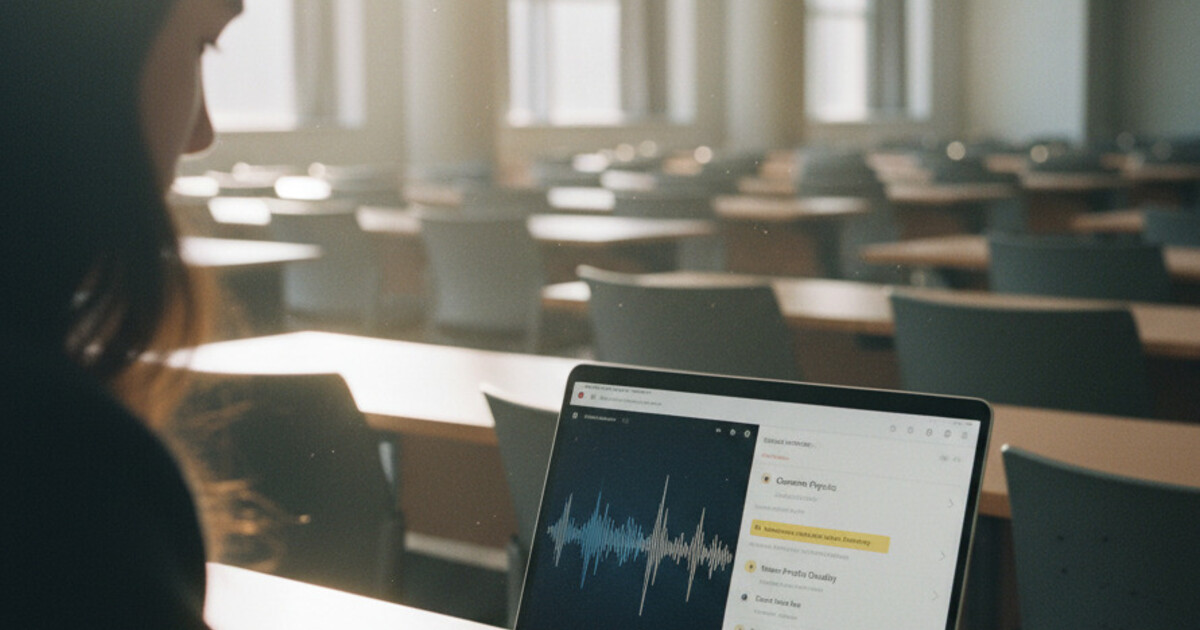
The problem shows up the moment you sit down in class. Mindgrasp doesn't record live audio. You'd need to capture the lecture with a separate app, export the file, upload it to Mindgrasp, and wait for processing. By the time you have usable study materials, the class is a distant memory.
Students searching for a best Mindgrasp alternative usually want one tool that handles the whole process: record the lecture, generate the notes, build the flashcards, create the quiz. No file juggling in the middle.
The best Mindgrasp alternative for most college students is NoteHive AI. It records live lectures and automatically generates organized notes, flashcards, and practice quizzes in one continuous workflow. It's free to start at notehive.app with no credit card required, and it supports 80+ languages.
Why Students Look for a Mindgrasp Alternative
Mindgrasp's design is straightforward: you bring the content, it processes it. That works well for reviewing a professor's uploaded slides, a recorded lecture someone posted online, or a textbook chapter you've scanned.
Most college students work primarily from live classroom sessions. Mindgrasp can't help while the lecture is happening. The upload-only workflow means study materials always arrive after a manual handoff step: record somewhere else, upload the file, wait for processing, then review the output.
Pricing adds friction too. Mindgrasp's free tier is limited, and full access costs around $9.99 to $14.99 per month depending on the plan. Students who primarily need flashcards and quizzes (not deep document analysis) often find cheaper or free tools that cover the same use case.
Students researching Mindgrasp alternatives typically need at least one of these: live lecture capture, a complete pipeline from audio to study materials, a genuinely free starting point, or multilingual support for non-English courses.
AI study tools now split into two categories: upload-and-analyze tools and live-capture tools. Upload-and-analyze tools (Mindgrasp, StudyFetch, NotebookLM) require existing content to work. You provide a PDF, a YouTube link, or a recorded audio file, and the tool turns it into summaries, key points, flashcards, or quizzes. Live-capture tools (NoteHive, Otter AI) start generating study materials the moment you tap record. For students in classroom settings, this determines when your notes exist. With an upload-only workflow, you record separately, upload after class, wait for processing, then review the output, adding roughly 20 to 40 minutes of admin to each session. With a live-capture tool, your notes and flashcards are ready by the time the lecture ends. Students who close that gap tend to review more consistently, since materials arrive before the forgetting curve has time to flatten what they just heard. The research on memory consolidation is consistent here: review within 24 hours retains 60% more than waiting 48 hours or longer.
What to Look for in a Mindgrasp Alternative
Before picking a replacement, pin down which Mindgrasp limitation is the actual problem. That narrows the options fast.
Live recording is a must? Go with NoteHive or Otter AI. Both capture live audio. NoteHive goes further by generating flashcards and quizzes from the recording automatically; Otter produces a transcript and basic summaries.
The upload workflow is fine, but Mindgrasp is too expensive? StudyFetch or NotebookLM cover similar ground for less. NotebookLM is free.
Need multilingual support? NoteHive supports 80+ languages. Most competitors top out at English with limited Spanish or French coverage.
Want the complete pipeline (notes, flashcards, quizzes, audio review) from a single recording? NoteHive is the only tool in this category that connects all four outputs: notes, flashcards, quizzes, and a podcast version of your notes for hands-free review.
Best Mindgrasp Alternatives for Students
1. NoteHive AI: Best for Live Lecture Capture
NoteHive is built around the live classroom workflow. Tap record when class starts. The app captures the audio, generates organized notes with key concepts labeled, builds a set of flashcards from the material, and creates a practice quiz. When the lecture ends, all three are already waiting.
The pipeline has one more step Mindgrasp doesn't offer: NoteHive converts your notes into an audio podcast for hands-free review during a commute or workout. For students who absorb material better through audio, that turns dead travel time into actual study time.
80+ language support means it works for courses taught in French, Spanish, Mandarin, German, Portuguese, or dozens of other languages. International students and language learners get the same automatic pipeline as everyone else.
Free tier: Yes, free to start at notehive.app. No credit card, no pressure during a trial period. Premium unlocks unlimited recordings and additional features.
Works in: Any browser, plus iOS and Android apps.
Best for: Students who attend live lectures and want notes, flashcards, and quizzes generated without any extra steps after class.
For a closer look at how the flashcard side of this pipeline works, see how to auto-generate flashcards from lectures.
2. NotebookLM: Best for Document-Heavy Research
Google's NotebookLM takes a source-based approach. You upload PDFs, add Google Docs, or paste YouTube links, and it lets you ask questions about those sources, generates summaries, and produces Audio Overviews from the material. It doesn't capture live lectures.
For students working from existing materials (uploaded lecture slides, assigned readings, recorded lecture videos), NotebookLM is strong. The source-grounded design keeps it from hallucinating details, since it only pulls from what you've uploaded. It's also free.
Free tier: Yes.
Limitation: No live recording. Works only with content you provide.
Best for: Research-heavy courses where you're working from documents rather than capturing live classroom sessions.
See how it stacks up in our NotebookLM vs Otter AI for students comparison.
3. Otter AI: Best for Clean Transcripts
Otter AI records live audio and produces accurate transcripts with speaker identification. It's reliable, well-established, and widely used in both academic and professional settings.
The gap: Otter stops at transcription and basic summaries. It doesn't build flashcards or generate quizzes. Students who want to go from a recording to active recall practice still need additional tools after Otter, which reintroduces the multi-app friction most students are trying to eliminate.
Free tier: Limited at 300 minutes per month.
Best for: Students who primarily need a clean, searchable transcript and are comfortable building their own study materials from it.
4. StudyFetch: Best Upload-Based Mindgrasp Swap
StudyFetch takes the same approach as Mindgrasp (upload content, get study materials) but focuses more heavily on flashcard generation and an AI chat interface. Upload documents or paste text, and it builds study sets, explains concepts on request, and creates quiz questions.
The UI is generally cleaner than Mindgrasp's, and the flashcard generation is competitive. If you specifically want an upload-first workflow but find Mindgrasp's interface clunky or its pricing steep, StudyFetch is the closest direct replacement.
Free tier: Limited.
Best for: Students who already have content to process and want Mindgrasp's core features with a slightly better experience.
For more options in this category, see best StudyFetch alternatives.
NoteHive vs Mindgrasp: Feature Comparison
| Feature | NoteHive AI | Mindgrasp |
|---|---|---|
| Live lecture recording | Yes | No |
| AI-generated organized notes | Yes | Yes |
| Auto-generated flashcards | Yes | Yes |
| Practice quiz generation | Yes | Yes |
| Notes-to-podcast conversion | Yes | No |
| 80+ language support | Yes | Limited |
| Free to start | Yes | Limited |
| Works in any browser | Yes | Yes |
The clearest difference: NoteHive starts at the live lecture. Mindgrasp starts after you already have a file to upload.
Mindgrasp vs NotebookLM: Which Should You Choose?
Both Mindgrasp and NotebookLM take the same fundamental approach: you supply the content, they analyze it. Neither records live lectures. For students working from existing materials (uploaded PDFs, assigned readings, or recorded lecture videos), both are worth considering.
The main difference is depth versus price. NotebookLM (free, from Google) focuses on source-grounded answers and Audio Overviews. It won't generate flashcards or quizzes directly, but it sticks closely to what you've uploaded, which keeps hallucinations low. Mindgrasp generates flashcards and quizzes alongside its summaries, which makes it more useful for active recall practice. Those features cost around $10-14 per month after the trial.
If you're choosing between the two: pick NotebookLM if you primarily want to query a pile of documents and get a free Audio Overview summary. Pick Mindgrasp if you specifically need flashcard and quiz generation from uploaded content and don't mind the subscription.
For students who attend live lectures, neither is the right starting point. A live-capture tool handles the actual classroom workflow before any document-based tool enters the picture.
For a direct three-way comparison, see Mindgrasp vs StudyFetch vs NoteHive.
How to Get Started with NoteHive
The setup takes about 2 minutes.
- Go to notehive.app and create a free account.
- Open a new recording session before your next class.
- Tap record when your professor starts speaking.
- Stop the recording when class ends. NoteHive generates notes, flashcards, and a practice quiz automatically.
- Review the materials right after class, while the content is still fresh.
The podcast feature is worth exploring for content-heavy courses. NoteHive converts your notes into an audio summary you can listen to on the way home. For students who find screen time exhausting after a full day of lectures, listening is an easier on-ramp to review.
For a broader look at what's worth using this year, see our best free AI study tools for students in 2026 guide.
Frequently Asked Questions
Is Mindgrasp free for students?
Mindgrasp has no permanent free tier — it offers a short trial, then requires a paid subscription (plans start around $10-13/month). Students who want a genuinely free option can use NoteHive at notehive.app: the free tier includes lecture recording, AI notes, flashcards, and quizzes with no credit card required.
Is there a free alternative to Mindgrasp?
Yes. NoteHive AI is free to start at notehive.app with no credit card required. It records live lectures and converts them into organized notes, flashcards, and practice quizzes automatically. The free tier covers the core study pipeline that Mindgrasp locks behind a monthly subscription.
Can Mindgrasp record live lectures?
No. Mindgrasp is an upload-only tool. You paste a YouTube link or upload a PDF or audio file, and it processes that content. It can't capture a live lecture in real time. Students who need to record their professor while they're speaking need a different tool.
What does Mindgrasp do?
Mindgrasp lets you upload documents, PDFs, YouTube videos, or audio files and generates AI summaries, key points, flashcards, and quizzes from that content. It's useful for reviewing recorded or written material but doesn't support live lecture capture.
Is NoteHive better than Mindgrasp for college students?
For students who attend live lectures, NoteHive has a clear advantage. It records in real time and turns the audio into organized notes, flashcards, and a practice quiz without any extra steps. Mindgrasp requires you to already have a recording or file to upload, which adds friction to the workflow most college students actually follow.
The Bottom Line
Mindgrasp handles document analysis well. For students who spend most of their time in classrooms rather than working through document libraries, the upload-first workflow adds friction at exactly the wrong moment.
NoteHive covers the full pipeline: record the lecture, get organized notes, review with flashcards, test yourself with a quiz. Everything generates automatically so you can focus on understanding the material rather than managing files between apps.
Ready to stop juggling study tools? Start studying smarter for free at notehive.app. Record your next lecture and get AI-generated notes, flashcards, and a practice quiz in under 2 minutes, all in your browser.
Ready to transform your study sessions?
Start using NoteHive AI in your browser — turn your lectures into organized notes, flashcards, and quizzes. No download required.