AI Powered Transcription Tools: Best Options in 2026
AI Powered Transcription Tools: Best Options in 2026
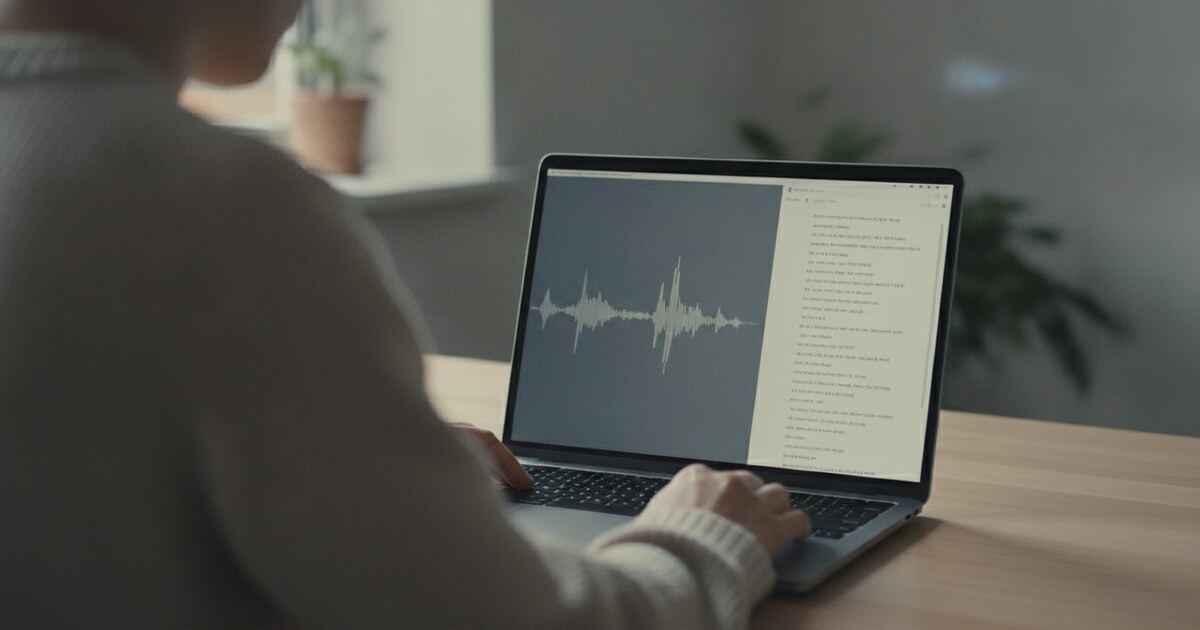
Typing out a 60-minute lecture takes about 4 hours. An AI powered transcription tool handles the same job in under 90 seconds.
That speed gap used to be the whole story. In 2026 it isn't. Most paid tools process audio fast and hit similar accuracy on clean speech. The real difference is what happens after the transcript exists — whether you get a wall of raw text or something built for the workflow you're actually running.
This guide covers what "AI-powered" means in transcription (the answer is more specific than the label suggests), which tools lead the category, and how to match the right one to your work.
An AI powered transcription tool converts audio or video to text automatically using deep learning models, typically processing one hour of recording in 30-90 seconds at 85-99% accuracy on clear speech. The leading options in 2026 are NoteHive (students), Otter.ai (meeting teams), Descript (content creators), Rev (high accuracy), and Sonix (multilingual workflows).
What "AI-Powered" Actually Means in Transcription
Older speech-to-text systems matched audio waveforms against phoneme templates. They worked on trained voices reading slowly in quiet rooms and broke apart with accents, natural pauses, or overlapping speech.
AI-powered transcription is different in a technically specific way: these tools use transformer-based deep learning models trained on large, diverse speech datasets spanning many languages, accents, and recording conditions.
OpenAI released Whisper in 2022 as an open-weight model trained on 680,000 hours of audio across 99 languages. It became the benchmark the entire industry competes against. Word error rates below 5% on clean English audio, with meaningful performance across dozens of other languages. Many commercial AI transcription tools are built on Whisper directly. Others train proprietary models on domain-specific corpora (legal, medical, financial) to push accuracy higher in narrow contexts where specialist vocabulary matters.
The practical outcome: AI-powered tools handle casual speech, false starts, filler words, and context-dependent word choices. A cardiologist saying "write a script" gets "prescription" in context, not "screenplay." Processing runs at 60-120x real-time speed in the cloud, so a 60-minute lecture finishes in 30-90 seconds on any device. This is the technical gap that separates these tools from older voice dictation software.
Best AI Powered Transcription Tools in 2026
1. NoteHive AI: Best for Students
NoteHive extends the transcript into a full study pipeline. Upload a lecture recording in any common audio format (MP3, M4A, WAV, WEBM, OGG, FLAC, AAC) or video (MP4, MOV, AVI, MKV, M4V), and the tool does more than convert speech to text. It generates organized notes with key concepts pulled out, turns those notes into flashcard sets, builds a practice quiz for self-testing, and can export your notes as a podcast-style audio file to review while commuting or at the gym.
Documents work too: PDF, DOCX, TXT, and other formats get processed the same way. The 80+ language support handles coursework in languages other than English.
The free tier covers recording and upload up to a note quota before Premium unlocks unlimited use. Works in any browser at notehive.app, no install needed.
Every other tool in this category stops at the transcript. NoteHive treats it as input to a study workflow, which is the only distinction that matters for students.
Best for: students turning lecture recordings into usable study materials without a second app.
2. Otter.ai: Best for Meeting Teams
Otter.ai's core product is live meeting transcription. It joins Zoom, Google Meet, and Microsoft Teams calls automatically, transcribes in real time, and surfaces meeting summaries with action items flagged. Speaker labels are included. The free plan covers 300 minutes per month; paid plans start around $16.99/month.
Accuracy sits at 85-95% on clear audio. The main advantage is automatic capture: nothing to upload or manage, the meeting transcript appears as the call happens.
Best for: professionals spending most of their day on video calls who need meeting notes without any manual file work.
3. Descript: Best for Content Creators
Descript wraps transcription inside an audio and video editor. After the tool converts a recording, you edit the media by editing the transcript: delete a sentence and the audio gets cut at exactly that point. Scrubbing waveforms to find the moment someone stumbled on a word becomes unnecessary.
Accuracy runs around 95% on clear audio. For anyone who just needs a transcript, the editor is extra overhead rather than a useful feature.
Best for: podcasters and video editors who want to cut recordings by editing words.
4. Rev: Best for Accuracy-Critical Work
Rev offers AI transcription at $0.25/minute and human-reviewed transcription at around $1.50/minute. The human tier consistently hits 99%+ accuracy with clean punctuation, speaker attribution, and corrections for technical terms. No subscription required; pay per file.
That model works well for high-stakes one-off jobs: legal depositions, journalism interviews, medical dictation, where a 5% error rate creates real problems.
Best for: occasional high-stakes transcription where errors carry consequences and human review is worth the cost.
5. Sonix: Best for Multilingual Work
Sonix supports 54+ languages with accuracy up to 99% on clean audio. Processing takes around 5 minutes per hour. The interface includes an editing layer, automated translation, and team collaboration tools. Pricing is $10/hour pay-as-you-go or $22/month with 5 included hours.
Best for: researchers, journalists, and content creators working regularly across multiple languages.
AI Powered Transcription Accuracy: What the Numbers Mean
Every AI transcription vendor publishes an accuracy figure, usually 95-99%. Those numbers come from benchmark datasets under ideal conditions: single speaker, quiet room, standard microphone, no accents. Real audio rarely matches that.
Here's how accuracy distributes across actual recording conditions:
- Studio or quiet single-speaker audio: 90-99%. Well-recorded lectures, podcast interviews, narrated tutorials from a lapel mic or headset.
- Video calls and phone audio: 80-90%. Compression and room echo degrade accuracy noticeably, even on a fast connection.
- Noisy environments: 70-80%. Cafes, vehicles, and shared workspaces push the model toward false substitutions and dropped words.
- Multiple overlapping speakers: 65-80%. Speaker separation remains the hardest open problem in AI transcription. No tool handles it cleanly.
- Domain-specific jargon: 70-90%, depending on whether the tool trained on specialized corpora. Medical and legal terms without specialty training get mangled consistently.
Word error rate (WER) is the right metric: incorrect words divided by total words. At 5% WER, a 60-minute lecture (roughly 9,000 words) produces about 450 errors. Still far faster than manual typing, but worth knowing before trusting a "99% accuracy" headline. For a full walkthrough of how the underlying models work, see our guide to AI transcription.
How to Match an AI Powered Transcription Tool to Your Workflow
The accuracy gap between tools on clean audio has narrowed. Picking based on that stat alone mostly doesn't matter anymore. Pick based on what you need after the transcript.
Students recording lectures: NoteHive converts the transcript into notes, flashcards, and quizzes automatically. One tool instead of three or four.
Teams running video calls all day: Otter.ai captures and labels meetings without requiring any file uploads. The value is in the automatic capture.
Podcast and video production: Descript's transcript-based editing cuts post-production time. The transcript becomes your editing interface.
High-accuracy, low-frequency use: Rev's per-minute pricing and human review tier handle legal or journalism work where errors cost more than the transcript itself.
International or multilingual publishing: Sonix's language coverage and translation features handle what single-language tools can't reach.
For free options across each of these use cases, see our guide to free transcription tools and the auto transcribing software comparison.
Frequently Asked Questions
What is an AI powered transcription tool?
An AI powered transcription tool converts spoken audio or video to text automatically using deep learning models trained on large speech datasets. These tools process one hour of audio in 30-90 seconds at 85-99% accuracy on clear speech. They differ from older voice dictation software by handling natural speech, accents, and multiple languages — most are built on or benchmarked against OpenAI's Whisper model.
How accurate are AI powered transcription tools?
Accuracy ranges from 85-99% on clean single-speaker audio in a quiet room, measured by word error rate (WER). Noisy environments and overlapping speakers push accuracy down to 65-80%. At 5% WER, a 60-minute lecture produces around 450 incorrect words — fast to correct, but not zero. "99% accuracy" figures from vendors are best-case benchmarks, not real-world guarantees.
Which AI powered transcription tool is best for students?
NoteHive AI is built for student workflows. After transcribing a lecture, it generates organized notes, flashcard sets, and a practice quiz automatically. It supports audio, video, and document uploads in 80+ languages, with a free tier to start. For a deeper comparison of transcription options, see our guide to transcribing audio to text.
Do AI transcription tools work on video files?
Yes. Most AI powered transcription tools extract audio from video automatically. NoteHive supports MP4, MOV, AVI, MKV, M4V, and other common video formats. Upload the video file and the tool handles the audio extraction with no manual conversion required.
Can I use an AI powered transcription tool for free?
NoteHive has a free tier with a note quota before Premium unlocks unlimited use. Otter.ai offers 300 free minutes per month. Most paid tools include limited free plans or trials. Check the usage cap before building a daily workflow around a free tier — most cap at 3-10 hours of audio per month.
Stop staring at raw transcript text trying to figure out what to study. Start organizing your notes free at notehive.app — upload a lecture and get AI-generated notes, flashcards, and a practice quiz in under 2 minutes.
Ready to transform your study sessions?
Start using NoteHive AI in your browser — turn your lectures into organized notes, flashcards, and quizzes. No download required.